

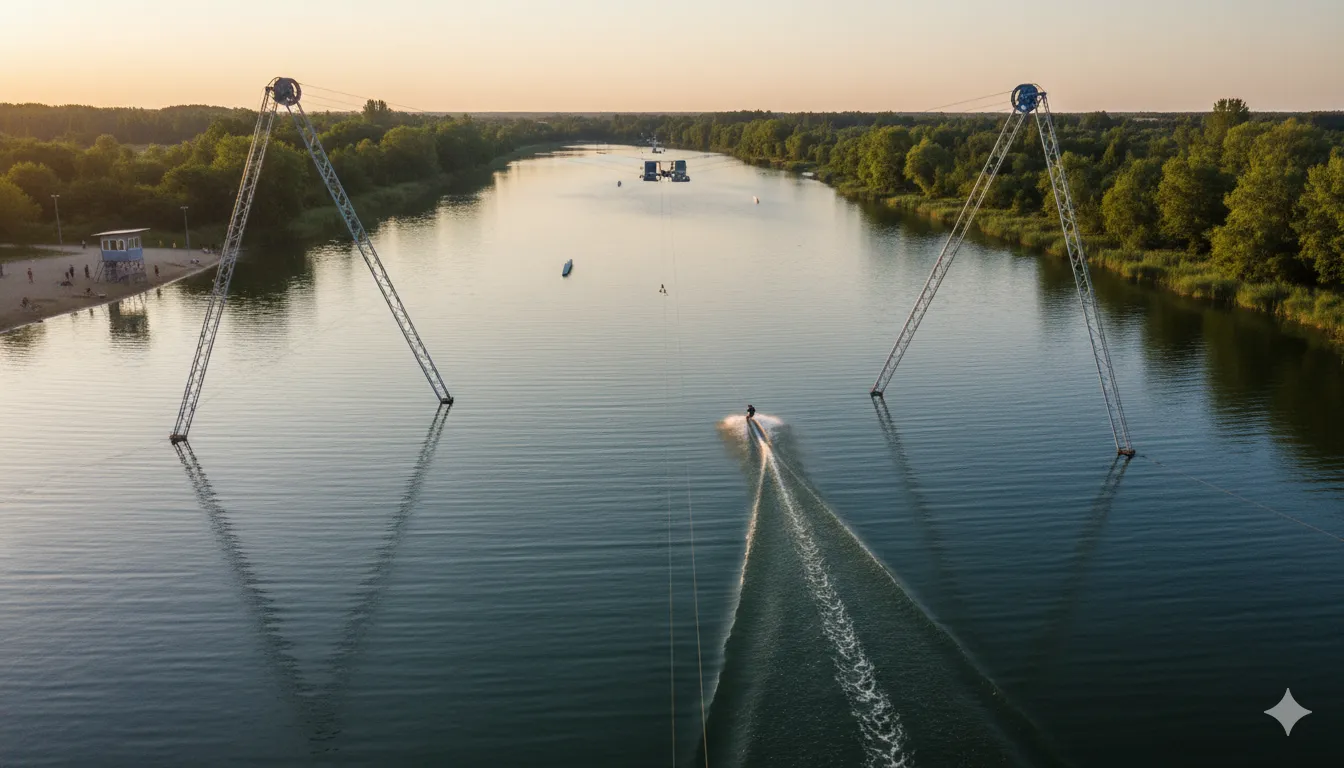
How Much Does a Cable Wakeboard System Cost? (2026 Guide)
A two-tower cable wakeboard system costs $35,000–$80,000 for equipment alone. When you add electrical connection, concrete anchoring, and site preparation, a complete two-tower setup runs $50,000–$100,000 all-in. Full-size 5–6 tower cable parks start at $300,000 and scale upward depending on features and location. Most compact systems break even within three years of operation.
If you’re researching wake park startup costs for the first time, the number of variables can feel overwhelming. This guide breaks down every cost category honestly — from the cable system hardware itself to the site work you’ll need done before opening day. We’ve supplied systems to 107+ parks across 20 countries, and we’ve seen what the total investment actually looks like at each scale.
What’s Included in a Two-Tower Cable Wakeboard System
A two-tower system is the entry point for new wake parks, mobile rental operations, and resorts that want to add a high-value water activity without committing to a full cable park footprint. Here’s what the core cable park equipment cost covers:
- Two towers — structural steel or aluminum masts with cable attachment points and sheave wheels. Height is configurable, typically 6–10 m.
- Drive unit — the electric motor, gearbox, and control electronics that pull the cable and manage speed. This is the precision heart of the system.
- Main cable — high-tensile steel cable sized for the span between towers. Longer spans require heavier-gauge cable.
- Rope and handle sets — towrope, quick-release bridle, and rider handle.
- Control system — operator panel, emergency stop, remote control, and speed regulation.
- Safety components — rope catchers, end buffers, and all CE/TÜV-required safety hardware.
Everything above arrives factory-tested and CE marked. See how WakeStation’s two-tower system is built — all drive components are designed for straightforward field replacement, which matters when you’re running a commercial operation far from the nearest service centre.
What is not included in the equipment price: electrical supply infrastructure, concrete foundations, installation labour (unless agreed separately), and wake features such as kickers or rails.
Full Cost Breakdown: Cable Wakeboard System Cost in 2026
The following table reflects current market ranges based on real project data. Your actual cable park equipment cost will depend on site conditions, local labour rates, and the configuration you choose.
| Cost Category | Typical Range (USD) | Notes |
|---|---|---|
| Two-tower cable system (equipment) | $35,000 – $80,000 | Varies by tower height, span, drive power, options |
| Electrical connection & power supply | $10,000 – $50,000 | Highly site-dependent — existing infrastructure can lower this significantly |
| Concrete foundations & anchoring | $3,000 – $10,000 | Hard-bottom lakes reduce cost; soft beds or mobile installs vary |
| Wake features (kickers, rails, sliders) | $20,000 – $60,000 each | Optional; add progressively as revenue grows |
| Installation & commissioning | Included / varies | WakeStation installs in ~2 working days; travel costs apply for remote locations |
| Annual wear parts (year 1–2) | €3,000 – €5,000 | Cable, rope, sheave wheels. Drops to €2,000–€3,000/year once bedded in |
| All-in two-tower setup (typical) | ~$70,000 | Equipment + electrical + anchoring, no features |
Production lead time from order to delivery is approximately four weeks. Factor in local permitting and electrical work when planning your opening date.
Two-Tower vs Full-Size Cable Park: Which Makes Sense?
The right system size depends on your available water area, expected daily rider volume, and capital budget. Both formats are viable businesses — they just serve different markets.
| Feature | Two-Tower System | Full-Size 5–6 Tower Cable Park |
|---|---|---|
| Equipment cost | $35,000 – $80,000 | $300,000 – $420,000+ |
| Water area needed | 80–200 m stretch | 250–500 m loop |
| Riders per hour | 8–12 (sequential) | 20–40+ (continuous loop) |
| Best for | Resorts, hotels, rental ops, new markets | Dedicated wake parks, high-volume attractions |
| Setup time | ~2 working days | 1–3 weeks depending on site |
| Break-even estimate | ~3 years | 3–5 years (higher revenue ceiling) |
| TÜV / CE certified | Yes | Yes |
Many operators start with a two-tower system and add a second unit or upgrade to a full loop once the market is proven. See how other operators have scaled their parks.
What Affects the Final Cable Wakeboard System Cost
No two sites are identical. Here are the factors that move the price up or down most significantly:
Tower Height
Taller towers allow a higher cable angle, which makes riding more forgiving for beginners — a significant commercial advantage. Taller towers require heavier structural engineering and add cost. Standard range is 6–10 m; competition setups may go higher.
Track Length (Span)
Longer spans between towers need heavier-gauge cable and higher drive torque. A 150 m span costs more than an 80 m span even with the same tower configuration. Track length is usually dictated by the water body — you can’t negotiate with geography.
Customisation and Options
Branding, custom colours, lighting packages, and additional rope sets add cost but also add commercial value. View available system options and features. The Pentasi FSC drive system is worth understanding if efficiency and low maintenance are priorities — the FSC (Frequency Speed Control) technology significantly reduces power consumption compared to older drive designs.
Location and Electrical Infrastructure
This is the wildcard in wake park startup costs. A site that already has three-phase power nearby might need $10,000 in electrical work. A remote lake with no grid connection could need $40,000–$50,000 just to bring in adequate power. Always get an electrical assessment before finalising your budget.
Wake Features
Kickers, sliders, and rails are what differentiate parks and attract repeat riders. At $20,000–$60,000 per feature, this is a meaningful line item — but it’s also the easiest one to phase. Open without features, prove revenue, then invest in progression obstacles as your rider base grows.
Is a Cable Wake Park a Good Investment?
The short answer: yes, when sized correctly for the location. Here’s how the economics typically work for a two-tower operation:
- Session pricing: $15–$35 per 30-minute session depending on market and region.
- Throughput: A two-tower system can realistically handle 40–80 paid sessions per day in peak season.
- Revenue potential: At $20 average and 60 sessions/day over a 120-day season, that’s $144,000 in gross session revenue — before lessons, rentals, food, and membership packages.
- Break-even: Most two-tower operators reach break-even within approximately three years on a $70,000 all-in investment, assuming competent site management and a viable local market.
The business model also has strong repeat-visit characteristics. Wakeboarding is a skill-based sport — riders come back to progress, unlike single-visit attractions. This creates a membership-friendly revenue structure that smooths seasonal cash flow.
The key risk factor is not the equipment — cable systems are durable and the annual cable park equipment cost for wear parts is manageable. The risk is site selection: a system in a market with no rider demand will not generate the volumes the numbers above assume. Validate demand before you commit capital.
Frequently Asked Questions
What is the minimum budget to open a cable wake park?
For a two-tower system with basic electrical and anchoring work, plan for a minimum of $50,000–$70,000. This excludes land/water access, permitting, safety equipment, and staffing. A realistic first-year operating budget including all pre-opening costs is typically $80,000–$120,000 for a compact operation.
How long does installation take?
WakeStation’s two-tower system installs in approximately two working days once foundations and electrical supply are in place. The equipment itself is produced in around four weeks from order confirmation. Total time from order to opening depends primarily on your local site preparation and permitting timeline.
Are cable wakeboard systems certified for commercial use?
WakeStation systems are TÜV approved and CE marked, which satisfies commercial operation requirements in the EU and is accepted as a baseline standard in most international markets. Always verify local regulatory requirements for amusement rides or water sports equipment in your jurisdiction.
What ongoing costs should I budget for?
Annual wear parts — primarily cable, rope, and sheave wheels — run €3,000–€5,000 in the first two years as the system beds in, then typically drop to €2,000–€3,000 per year. Add staffing, insurance, water access fees, and marketing to build a complete operating cost picture. Equipment maintenance is the smallest line item in a well-run park’s cost structure.
Ready to get specific numbers for your site? Contact WakeStation with your water body dimensions, power situation, and target rider volume — we’ll help you build a realistic budget before you commit to anything. You can also explore the full system specification to understand exactly what you’d be buying.